


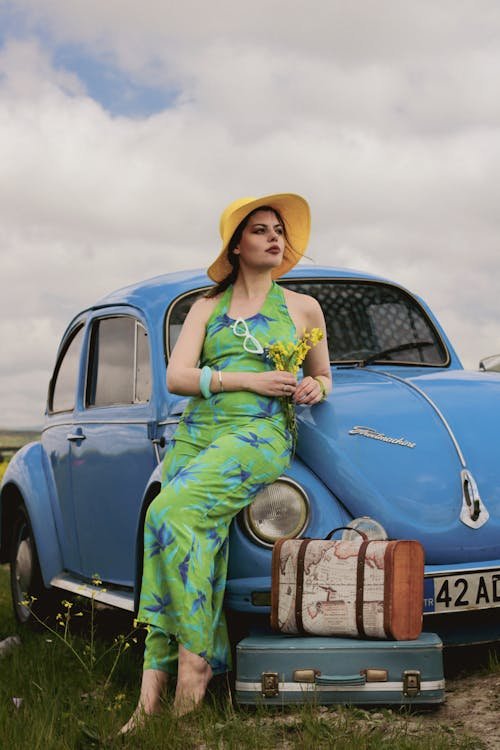
Pattern 60s dresses
An introduction to Pattern 60s dresses fashion
The 1960s, characterized by dramatic social changes, is a decade that is still particularly important today. Traditional hierarchies begin to disappear, giving way to the birth of modernity.

The way people dressed was a clear sign of changing attitudes.
In the 1960s,
many openly chose to look different from the norm. Innovative designers and more informal shopping opportunities drew a line between generations and created a new market for youth fashion.
Our collection follows the various aspects of this rapidly accelerating style revolution and includes standout pieces from many of the decade’s most influential designers.
I had to go to Sunday school with white gloves, hat and purse, like a miniature mother, in a dress she made herself—and just like hers! I mean, who wanted that?! We just wanted to get started.
Marion Foale
The invention of youth fashion
In the 1950s, fashion was dominated by the taste of a wealthy adult elite.
Paris remained the engine of the fashion industry, with sophisticated haute couture garments produced in regular collections by artists such as Cristóbal Balenciaga and Hubert de Givenchy (creator of young people’s incomes were higher than they had been since the end of World War II. Increasing economic power led to a new sense of identity and the need to express it.
The fashion industry reacted quickly and created designs for young people, not just copying “adult” styles. Beatniks and Mods (short for “modernists”) were particularly influential at the beginning of the decade.
Mods indulged in European clothing styles – characterized by bold colors and lines – as well as American soul and R&B music. They shaped the tastes of young people around the world and inspired the look of bands like The Who, The Small Faces and The Beatles.
Model wearing a dress by Mary Quant, 1964, England. Photo by John French. Museum no. AAD/1979/9. © Victoria and Albert Museum, London
New stores for new fashion
To break the dominance of Paris and realize the full potential of youth fashion,
a new kind of business was needed. Boutiques were small self-service shops set up in London by designers who wanted to offer affordable fashion to ordinary young people, offering a very different experience to the often more formal “outfitters” and old fashioned department stores. Being “on the ground”
they were able to get to know their customers well and respond quickly to their needs. Designers Mary Quant and John Stephen pioneered this new form of retail. Both opened their first stores in the mid-1950s. They designed and sold highly influential fashion that initially evoked the Mod aesthetic of clean, tailored minimalism.
Reign of the Store
Within a few years, the boutique scene exploded.
Young people flocked to ‘see and be seen’ in the vibrant new shops around Kings Road and Carnaby Street in London. The tight, colorful outfits created by London designers became widely influential in the UK, as well as in Europe and America, helping to create the seductive image of ‘Swinging London’.
Popularized by Mary Quant, the mini skirt quickly earned its place as the decade’s most iconic look as young women relished the chance to “go for it.” Later in the decade, influential designers included Barbara Hulanicki, who like Quant focused on fun Pattern 60s dresses with daring short hemlines, and Marion Foale and Sally Tuffin, known for their edgy casual wear and pioneering pantsuits for women.
An unnatural obsession
In the 1960s, people fell in love with new man-made materials and young designers
were eager to bring new angles to established forms. They used the potential of modern plastics and synthetic fibers – plexiglass, PVC, polyester, acrylic, that are eye-catching and fun. The search for a truly modern form of clothing was embodied by the “paper dress”. Made from cellulose, rayon or polyester, these disposable garments were first developed in 1966 as a marketing gimmick for an American company that made paper hygiene products.
Space age clothes
As the decade progressed, dress codes also became more relaxed for the older generation:
tailoring became looser, public figures such as Jackie Kennedy began to wear shorter skirts, and fewer and fewer people wore accessories such as hats and gloves. High-end fashion also embraced the new casual vibe. From the mid-1960s, André Courrèges used the couture cutting technique to create bold, modern clothes.
His boxy mini Pattern 60s dresses and pantsuits, often done in the white and silver color scheme that became known as the “space age”, were worn with astronaut-style accessories such as flat boots, goggles and helmets. He also wasn’t afraid to promote new, cost-effective materials when they best suited his eye-catching designs.
. Cardin was particularly enthusiastic about new materials such as vinyl, silver fabrics and large zippers, creating radical shapes such as his famous “visor” hats. Italian designer Emilio Pucci was also influential. He produced sophisticated clothes for the jet set, but his designs were anything but conservative. Pucci was the first designer to use a signature style of royalty for high fashion, creating a range of colorful printed silk fabrics.
These were used for seemingly endless scarves and ties, as well as loose-fitting Pattern 60s dresses and pajama suits, the contours of which reflected a growing interest in ethnic style. Pucci’s vividly flamboyant designs foreshadowed the psychedelic patterns of the drug-fuelled counterculture.
Looking for alternatives
By the late 1960s, the style had become quite theatrical.
Fashion-tested longer hair for men and women and a flared contour for trousers. Men enjoyed the newfound freedom to be flamboyant, dressed in suits with bright statement shirts and high heeled boots. As clothing became increasingly unisex, they increasingly shopped in the same stores as women.
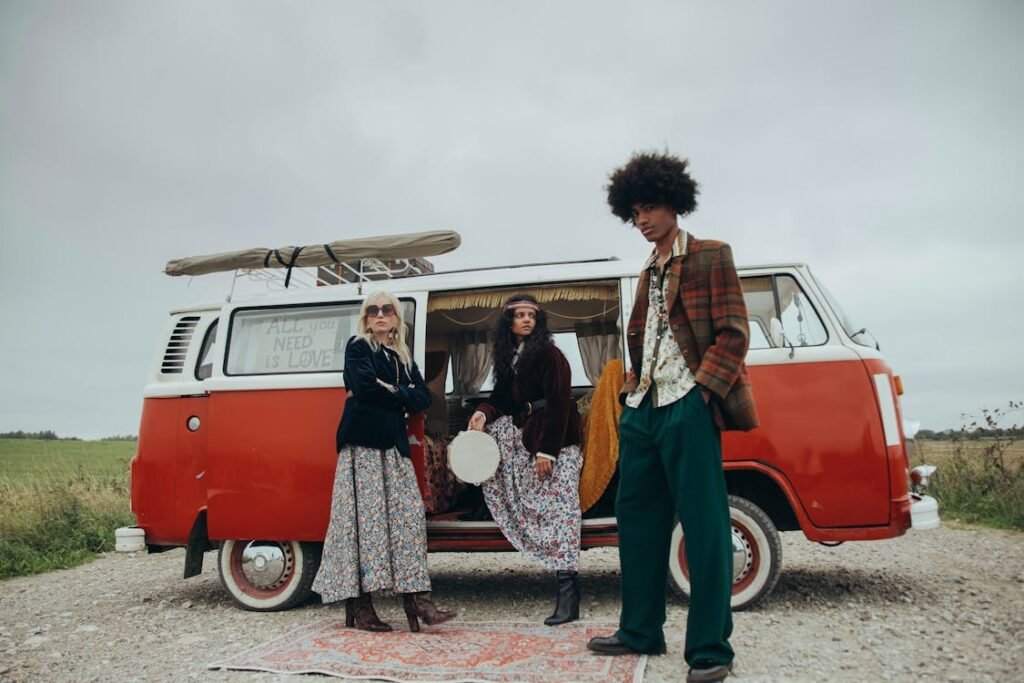
With the war in Vietnam and student uprisings in France, opinion leaders began to denounce Pop’s materialistic brilliance. People were inspired by Eastern culture. The ideas and mix-and-match aesthetic of the California hippie movement crossed the Atlantic, giving people the freedom to “live differently” and wear clothing from a range of non-Western cultures.
Fashion leaders began wearing long, loose and layered clothing inspired by second-hand or “vintage” styles, often from the late 1800s and 1930s. London’s Kensington Market became a mecca for young people who wanted to create their own alternative look, with lots of colorful clothes, mostly from India. This new direction was reflected in the fashions of Zandra Rhodes, Foale and Tuffin and Yves St Laurent, all of whom showed an interest in ethnic textiles.
Click here



Leave a Reply