


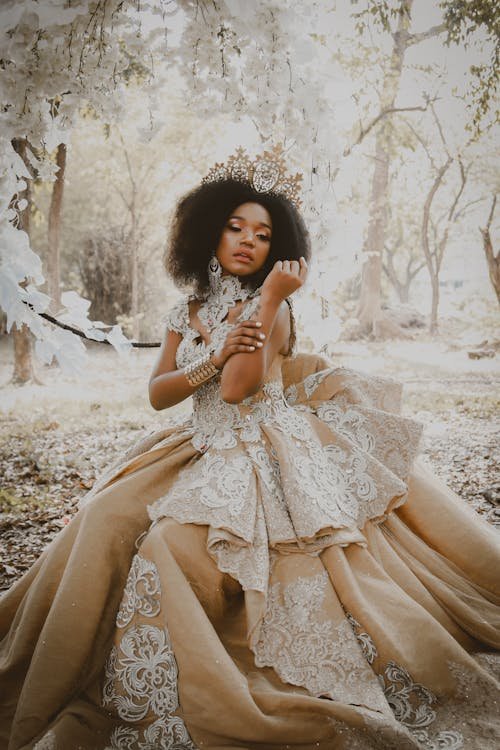
African dresses
African dresses are the traditional clothes that people in Africa wear.
African clothing and fashion is a versatile subject that provides insight into different African cultures. Clothing ranges from colorful textiles to abstract embroidered robes and colorful beaded bracelets and necklaces still coexist with Western styles. A major contrast in African fashion is between rural and urban communities.
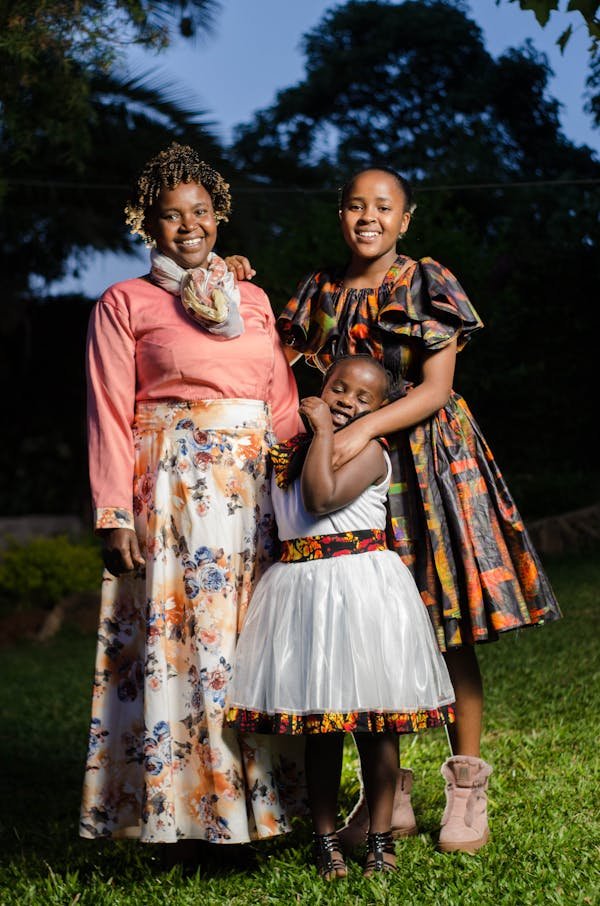
Urban communities tend to be more exposed to trade and the changing world, while new western trends take longer to reach rural areas.
In Northeast Africa,
especially Egypt, styles of traditional women’s clothing were influenced by Middle Eastern cultures; This can be illustrated by the simple embroidered jelabiya, which is worn similarly in Arab states of the Persian Gulf.
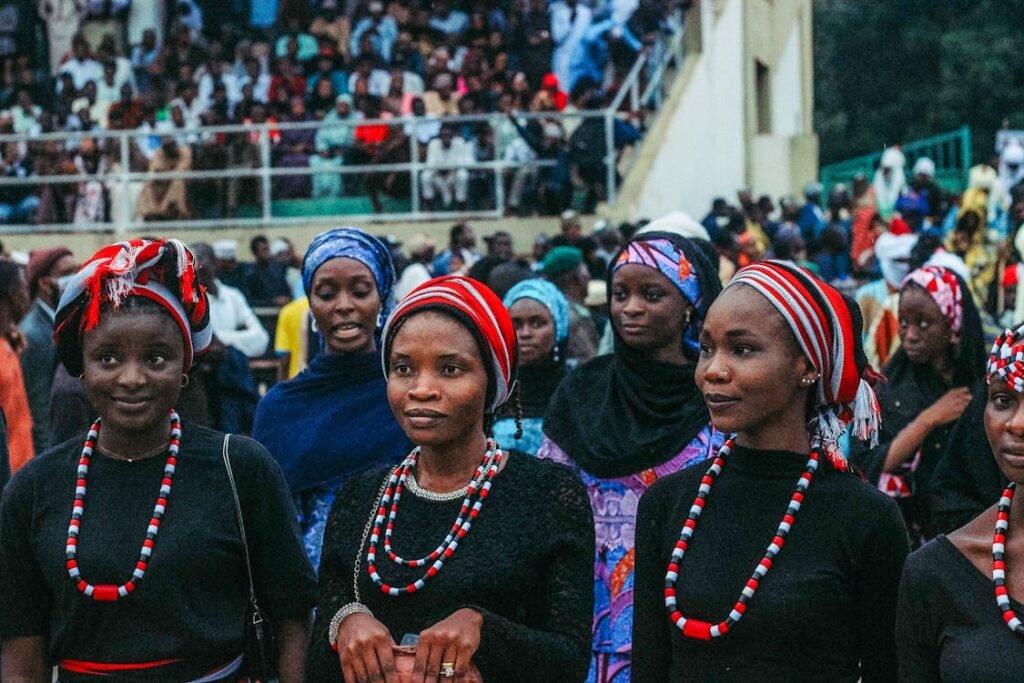
The djellaba (worn in northwest Africa) has similar characteristics to the boubou, dashiki, and Senegalese kaftan. While women in Nigeria wear headbands.
In the Sahel, the dashiki, Senegalese kaftan and grand boubou are more common, although not exclusive (in Mali, for example, the bògòlanfini is worn). Dashiki is highly stylized and is depicted with a graceful V-shaped collar. In contrast,
the grand boubou is simpler, even simpler than the djellaba, although the color scheme reaches impressive proportions, especially among the Tuareg, who are known for their indigo-colored costumes.
plays a crucial role in identifying the culture and people of South Africa, as everywhere else in the world. African dresses can be chosen for comfort or used to express style, political beliefs, religious beliefs, and a perspective on life. Regardless of how it was chosen, each garment has a long history.
Pre-colonial
One of the earliest remains of South African clothing has been traced to about 2,000 years ago, when the descendants of the Middle Paleolithic people, the Khoisan, settled on the Cape Peninsula .
southwestern end of the African continent. This people was divided into two groups: San hunter-gatherers and Khoikoi herders. Without contact with foreign countries, clothing and materials for importation were not available to them. Instead,
these early settlers converted available resources such as game and the softer hides of domesticated animals, and sometimes plants and ostrich eggshells, into clothing. In addition to these resources, the introduction of metal also gave them a wider range of fashion choices.
The arrival of the Khoisan people was soon followed by groups of Bantu people who came into conflict due to Bantu expansion and occupied the lands of the Khoisan people, causing them to disperse and be absorbed into the Bantu-speaking community .
The settlement of Bantu-speaking peoples in South Africa between 900 and 1300 AD. led to the formation of the Mapungubwe Kingdom, which prospered through trade from other foreign regions with gold and ivory in exchange forAfrican dresses, glass beads and Chinese porcelain .Bantu-speaking inhabitants of South Africa also led to the derivation of modern main ethnic groups in South Africa,
speaking people, consisting of four smaller groups: Zulu, Xhosa, Swazi, Ndebele. The other ethnic groups in South Africa are the Sotho-Tswana peoples (Tswana, Pedi and Sotho), while the ethnic group in the northeastern areas of present-day South Africa are the Venda, Lemba and Tsonga .All these groups of people who share the common homeland of South Africa have their own language and culture.
See also
: History of South Africa
Colonization from the mid-17th century undoubtedly changed South Africa in every way and fashion together, all these changes, heavily influenced by the arrival of new materials from Europe as well as the Eurocentric view of the body and clothing that South Africans perceived as wearing the neck, brought about changes in the traditional fashion of these indigenous peoples. Traditional clothing made from local materials was combined with new styles and objects from Europe In the early 19th century, glass beads and plastic beads from Europe added new materials to the traditional collection of materials used by the indigenous people of South Africa to make beads.Isishweshwe cloth was introduced to South Africa through imports from England and Germany towards the end of the 19th century.
The fabric was made with indigo dye and later with a synthetic form of indigo dye in a color range from blue and red to maroon and brown, associated with decorations of replicated and ordered geometric patterns. Isishweshwe slowly made her way into the South African fashion world, appearing on the clothes of workers, rural women and male soldiers. Although popular because it was imported from other countries, it was not recognized as unique to African fashion until 1982 when a South African company,
Da Gama Textiles, began manufacturing the fabrics, leading to its recognition as a representative fabric. Considered .
Under colonial influence, Western fashion dominated in South Africa, with the educated class favoring Edwardian coats and hats. Workers also chose the Western style, which increased the demand for these products. Shops in these working areas sold a wide variety of goods such as boots, coats, tweed jackets, waistcoats, shirts, suspenders, belts, hats, handkerchiefs and pocket watches
The apartheid era
In this era when people were classified by their ethnicity and race, the unique clothing of each South African indigenous people served to distinguish that community But more than that, wearing traditional clothing also served as a way for colored South Africans to express their opposition and dissatisfaction with the government, which was ruled by a white minority. Traditional clothing was worn by leaders such as Nelson Mandela, who wore traditional Xhosa clothing during his trial for attempting to overthrow the government in 1962. The expression of his identity as a true South African spoke to the aggression of the resistance and the demand for self-control over the country.]
While traditional African dresses was worn as an expression of one’s identity, South African fashion during the apartheid era saw a steadily growing influence from European fashion. Pre-apartheid South African fashion relied heavily on European fashion imports, while post-apartheid fashion celebrated ethnicity and many South African designers added a touch of Africa to European clothing styles. A notable example is Marianne Fassler, who incorporated leopard print into European-style clothing. She drew inspiration from South African sources, from indigenous clothing to artists such as Barbara Tyrrell and Marlene Dumas.
After the apartheid
After the end of apartheid in 1994, traditional South African clothing remained an expression of pride in one’s country and identity and served as a major source of inspiration for. Pieces like headscarves and A-line skirts inspired by the Xhosa people of the 19th century were brought back to the runway.
South African fashion is a convergence of different styles, cultures and responses to social circumstances. It is a mixture of Africans themselves and foreigners with whom they have come into contact. Because of its diversity, no single style of dress is considered national dress, but rather each group of people has its own way of dressing.
Development of the fashion industry
See also: Fashion in Nigeria
As of 2016, the development of shops, clothing stores, hotels, etc. is booming.
Over time, the development of art through the creation of fashion became more and more recognized in countries such as Kenya, Morocco, Nigeria and South Africa. Although there is a global divide between the West and its interpretation of African fashion through the use of tribal patterns, many designers have come forward and made an impression on the high-end fashion industry by giving a new twist to their traditional African clothing. New designers are now looking to expand their entrepreneurial footprint and educate the world about the versatility of African fashion.
More specifically
, Johannesburg’s development to influence the fashion industry was more deliberate. With the help of many designers, Johannesburg has built a fashion district in the city center that has made a name for itself around the world. While new designers use this location as a springboard for their expansion, established fashion houses also play a role in the district’s maturation.
The transition of established and developing fashion houses has given South Africa international prestige in the fashion industry and made South Africa Fashion Week a key destination in the global fashion conquest at the start of each Spring/Summer and Autumn/Winter seasons. Due to the abundance of established black talent in the city, Johannesburg has become one of the most important fashion capitals, not only for black creatives, but also for designers of all races.
Western dresses
Main articles: Mitumba (clothing) and Global used clothing trade
African evening wear has normalized Western clothing conventions and styles
European influence is also widespread in the African way. For example, Ugandan men have started wearing “long trousers and long-sleeved shirts”. On the other hand, women have begun to adopt influences from “19th century Victorian clothing”.
These styles include: “long sleeves and puffed shoulders, a full skirt and often a colorful bow around the waist.” This style of clothing is called busuti. Another popular trend is to combine a modern western garment such as t-shirts with traditional scarves. Rural communities have also begun to incorporate used Western clothing into their everyday styles. For example, women in rural Zambia have begun “combining used clothing with a two-meter piece of chitengi to act as a wrap over the African dresses
[This quote should be cited] With the globalization of the influence of Western clothing from the city to the countryside, it has now become more common to see people wearing different styles of clothing.
Second hand dresses
In all Western societies there are non-profit organizations that sell used clothing to for-profit companies in Africa.
This European dress is widespread in some parts of the continent. This second-hand garment is called mitumba in some areas and is controversial. Critics point out that it poses a threat to local clothing manufacturers and complain that it exploits consumers, while others, like the average Nigerian citizen, argue that these used garments provide useful competition for often expensive and low-quality local products.
Before charities started importing used clothing, cheap cotton clothing from Asia was the largest import of cotton African dresses. Afterwards, Western charities began sending used clothes to African refugees and the poor. Sub-Saharan African countries are among the top destinations for used clothing imports. Although used clothing was often sent to the lower classes, it is now also widespread among other social classes in Africa.
Second-hand clothes are found in everyday clothing for many people, regardless of class. This is because there was always a large selection of clothing and it was well priced. However, in Muslim areas such as North Africa, this trade is generally not carried out for religious reasons. Instead, Muslim African men wear a long, flowing dress and women wear a hijab and a dress that covers the entire skin.
Although these clothes are often donated by organizations that assume people in rural and poor areas will get them first, people living in cities get the clothes first. Because urban areas are characterized by fast-paced and changing lifestyles, they can adapt to changing cultures, such as changes in traditional clothing.
Clock here



Leave a Reply