


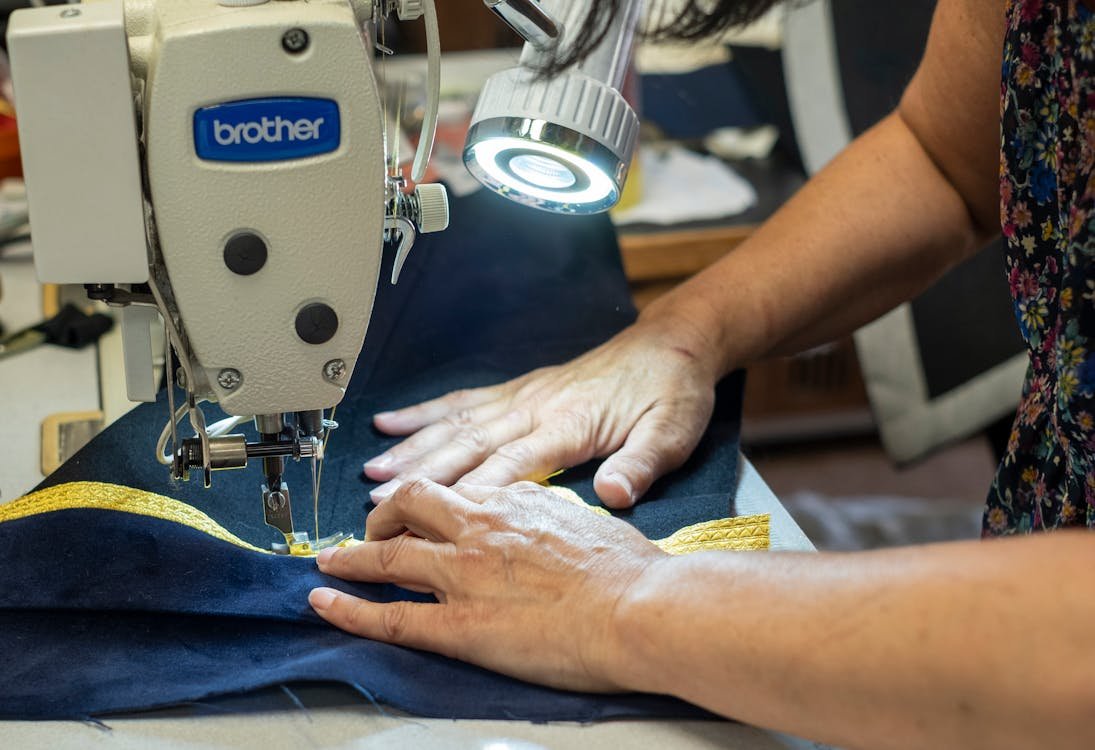
Stitches clothing dresses
The Mending Café
Holding the sheer fabric of a silver-blue moonlight Stitches clothing dresses, Gale and Clarence talked amid the chatter of craftsmen and the hum of sewing machines. Like me, they also investigated the fate of a torn dress during the Remakery’s Thursday night ‘Repair Surgery’.1 Clarence, a trainee mechanic and salesman at a local shop in Edinburgh, had often passed the Remakery and peered in curiously. to watch the repair workers, but had never been inside before.
She shared her thoughts with me:
This is my first time here. I live nearby and passed by it. I wanted to go there and then I saw on Facebook that there were free events on Thursdays. I was really welcomed . I brought a dress and the bottom, the hem, the thread had come off and it had come off. The Stitches clothing dresses is a long shirt. And the color looks a bit like it was in the 70s, that needs to be fixed. I don’t really know what to do myself.
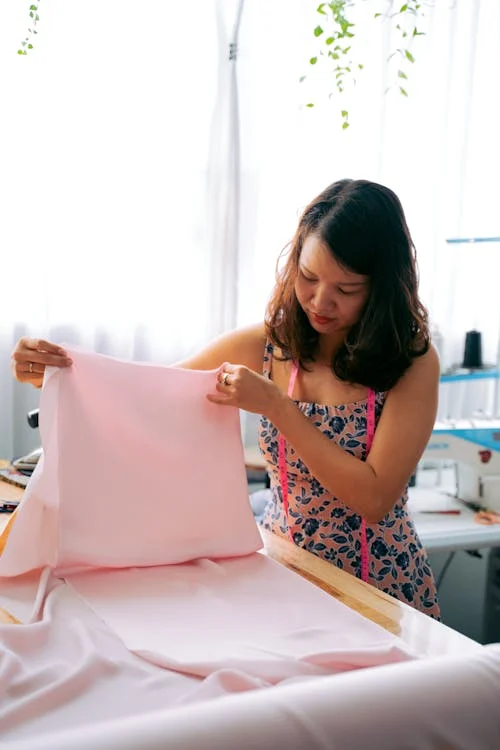
With Gale, an experienced volunteer repairman, at her side, Clarence laid her garment on the table and smoothed it with one hand, but as soon as she raised her hand, the fabric crumpled and shifted..
But the garment kept bouncing back when it was rolled and bent. Somewhat frustrated, she paused for a moment and then carefully felt the fabric’s material. Using her haptics, Clarence soon began to gently fold up the hem while grabbing a few pins from the pincushion (picture 1). Once the garment was folded and pinned, it lay quietly on the table and Clarence breathed a sigh of relief.
With the garment now ready to work,
Clarence tried it on (image 2). After several rounds of adjustments, during which Clarence ran the fabric along the contours of the body, looked in the mirror and sought Gale’s opinion, she finally managed to adjust the hem to a length that “looked good for a blouse”. With this first step, the garment was ready to be hemmed again.
As Clarence walked over to the sewing machine, Gale handed her a small piece of “practice fabric.” After my question, Gale began to explain the first procedures:
I give them [first repair shops] a lot of practice without even threading it [the machine] so that they can understand the mechanism of the machine .We have so-called “practice sheets” for this. The key is the speed of the foot control [on the machine] and your hand control is based on the
speed of the foot control.
We will focus on that for the first 15 to 20 minutes. And then we let them thread the machine and practice with straight lines, then zigzag, so we take them with us and that’s the point. People who are new, here we can encourage them.
After completing his exercises with the leftover fabric, Clarence placed the moonlight garment into the sewing machine and began to repair his Stitches clothing dresses with a straight stitch. Under Gale’s careful guidance, Clarence began his introduction to the world of repair and the repair community!
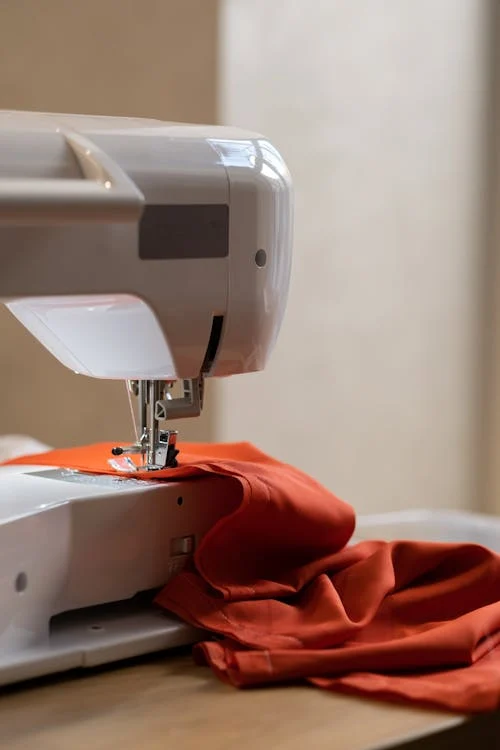
Clothes often get torn. Garments react instinctively and reliably to make their damage visible to the wearer’s naked eye. But experiencing these material damages often triggers emotions Anxiety or fear on the surface. For some, correcting these flaws through repairs offers a chance
at redemption. Re-stitching
raw hems or broken buttons helps protect marginalized garments that are on the verge of irretrievable banishment by bringing them back into use. As repair shops engage in this humble but metamorphic practice, various sensibilities emerge that are both of their own making and themselves subject to the practice.
By exploring the concept of taste, this article aims to explore how it enables everyday repairers to form an alliance with their practice and ultimately make repairs an object of passion. This task is achieved by drawing on the work of a growing number of scholars who view taste as a skill and practice (see Wright 2018; Bentia 2014; Hennion 2007, 2004; Gherardi 2009).
Her exploration of the concept of taste as a sensory practice transcends social class and status groups and focuses on the role of the body and its sensory response to its socio-material environment.Unlike Bourdieu’s (1984) tasters, ignorance (or failure) in this case poses no risk of social exclusion in a community of tasters or repairers.
With this description of taste
, I build on three years of my original multi-sited ethnographic work at local Stitches clothing dresses repair events in four cities, namely Helsinki, Auckland, Wellington and Edinburgh, to investigate how repairers can shape taste for repair in and out of embossing.
In recent years, many Western countries have experienced a rapid growth of community repair events (Charter and Keiller 2019). Since the Repair Café Foundation (RCF) was founded in the Netherlands in 2012, a global “fixer movement” has emerged to promote product longevity through open access repair cafés (Charter and Keiller 2019).
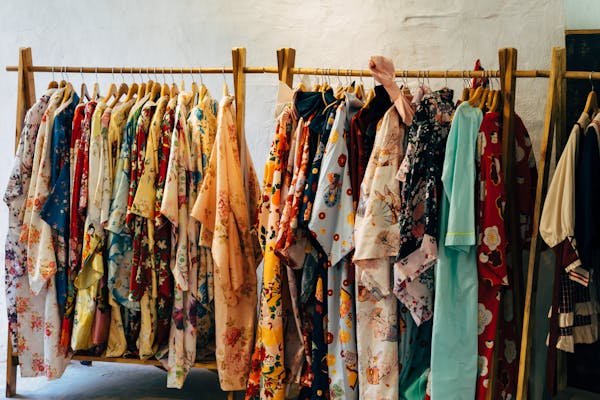
Participants in these events often come from different socio-economic backgrounds and bring a variety of garments to learn how to repair or to be repaired by an experienced repairer (Durrani 2018a). In addition to engaging with textile waste,
the multiplicity of these public spaces make community repair events crucial sites for understanding how taste is enacted, sustained, and often negotiated and communicated in a practice in collective or individual ways.
The aim is to use the concept of taste as a reflexive practice to understand how repair shops can assess the quality of a repair and also actively build a bond with their practice. In doing so, I seek additional guidance from sensory ethnography to support my immersion in repair practice. As I reflect on my practice in relation to other preparers’ and our collective and individual
encounters with repaired garments,
I emphasize the extensive procedures and processes that preparers undertake to create their practices. An examination of these processes includes the mender’s endless discussions of fabric choices, current and future projects, shared physical experiences of various sewing techniques, pattern making, and needle threading.
It enables a nuanced discussion about how different socio-material negotiations affect men’s decisions about the right or wrong way to practice. By examining these encounters and healers’ experiences in and through their sociomaterial environments, we can better understand how healers evaluate and refine the quality of their practice while communicating it to others. In other words, we see lay people who reflexively and understandably exercise taste in and through their practices.
Click here








Leave a Reply