



Blue dress
is the dress blue or gold
Not since Monica Lewinsky was an intern at the White House has a blue dress caused such a stir.

But for half a day, people on social media have been arguing over whether a photo shows a perfectly beautiful, form-fitting dress in blue with black lace fringes or white with gold lace fringes. And neither side wants to give up.
This fight is about more than just social media
– it’s about primordial biology and how human eyes and brains evolved to see colors in a sunlit world.
. The light hits the retina at the back of the eye, where pigments form neural connections with the visual cortex, the part of the brain that processes these signals into an image.
What’s important, though, is that this first flash of light is made up of the wavelengths that light up the world and are reflected by everything you look at
Without you having to think about it
, your brain detects what color the light is reflecting off the object your eyes are looking at and essentially subtracts that color from the “real” color of the object.
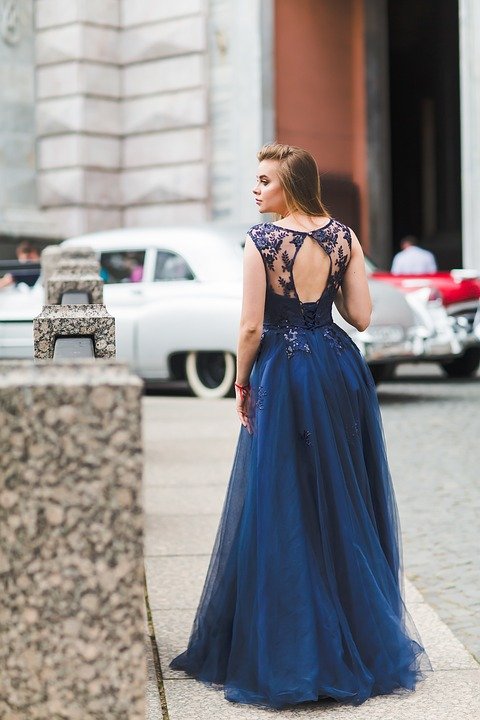
“Our visual system would have to discard information about the light source and extract information about the actual reflection,” said Jay , a neuroscientist at the University of Washington.
“But I’ve been studying individual differences in color vision for 30 years and this is one of the biggest individual differences I’ve ever seen.” sees white gold.)
Normally this system works well
. However, this image reaches a kind of perceptual limit. This may depend on how people are wired. Humans evolved to see in daylight, but daylight changes color
. This chromatic axis varies from the rose-red of dawn to the blue-white of midday to the reddish dusk. “Either people ignore the blue side, in which case they see white and gold, or they ignore the gold side, in which case they see blue and black somehow.”
We asked our team of top photographers and designers to edit the image a bit in Photoshop to reveal the actual red-green-blue composition of some of the pixels. We thought that would definitely answer the question. And it came close.

For example
, in the image featured on BuzzFeed, Photoshop tells us that the spots that some people see as blue actually appear blue. But… it probably has more to do with the background than the color itself.
“Look at your RGB values. “Right,” says Conway. “But you’re doing a really bad trick, which is projecting these dots onto a white background. Show the same patch on a neutral black background and I bet it looks orange.” He also ran it through Photoshop and now believes the dress is actually blue and orange.
The biggest controversy in cosmology just got bigger

Therapy sessions are revealed through a psychiatric care company’s unsecured database
How to solve a problem like Polestar?
Advertising
The point is that your brain tries to interpolate a color context for the image and then spits out an answer for the color of the dress. Even, with his weird white and gold thing, admits the dress is probably blue. “I actually printed the photo,” he says.
“Then I cut out a little piece and looked at it, and completely out of context it’s about halfway up, not that dark blue color. My brain attributes the blue to the light source. Others attribute it to the dress.”
Even WIRED’s own photography team—temporarily driven into fits of existential despair by the sheer number of people seeing a white-and-gold dress—eventually came up with a contextual, color-constant explanation.
“It became clear that the correct point in the image to balance was the black point,” says Harris.
So when the context varies, people’s visual perception also changes.
Click here







Leave a Reply