


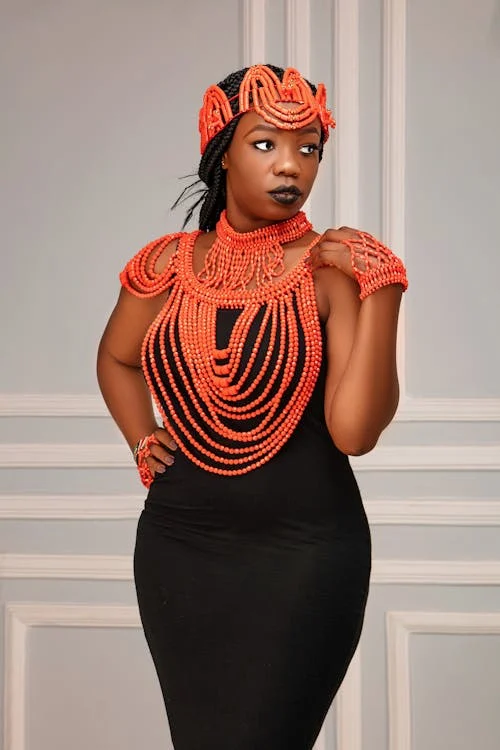
African dress fashion
African style: With freedom came fashion sense
African dress fashion can be transformative. This exhibition at the Brooklyn Museum takes visitors to the historic moment when almost an entire continent shed its colonial garb and emerged on the world stage.
Five models pose with their hands in front of a blue wall, each wearing a boldly colored outfit and an off-the-
shoulder black dress.
Many years ago I worked as a salesperson at Hugo Boss in the Beverly Center in Los Angeles.
I sold the range that the store sold: luggage, accessories, underwear, African dress fashion.
My favorite thing to sell though was men’s suits, because a good suit is often transformative. A man came into the store oblivious, but after donning a well-tailored navy blue two-button suit with a peak lapel, he appeared accomplished and accomplished.
When I walked into the new Africa Fashion exhibit at the Brooklyn Museum, I felt like I was witnessing something wonderful, something more surprising than just one individual’s makeover.
I was transported to the historical era when almost the entire continent shed its colonial rule and the garb that went with it and emerged transformed on the world stage.
This overall change was marked from the outset by a wall containing a timeline of text and documentary photography detailing key moments in the African liberation struggle of the 20th century.
Video monitors show images from important ceremonies, such as the founding of the Republic of Ghana in 1957. An adjacent wall displays the flags of all 54 African countries with explanations of their insignia and heraldry.
The exhibition seems to be deliberately based on the history of independence movements; Christine Checinska, the curator who led the team that organized the original exhibition at London’s Victoria and Albert Museum, confirmed this, saying it was crucial for her that viewers understood the African dress fashion had “a political dimension”.
In the exhibition catalogue,
Checinska writes that Tunisia and Morocco freed themselves from French rule in 1956 and that Ghana was freed from Great Britain a year later. Then, in African countries shook off colonial rule, cementing this period in history as the “Year of Africa”.
“The radical social and political reorganization led to a cultural renaissance across the continent,” writes Checinska.
I think it should be recognized that self-rule has not always resulted in wise political leadership or policies that benefited the majority of citizens, but some countries that were once hampered by colonial rule have learned to stand on their own two feet to stand.
According to organizers Ernestine White-Mifetu, the museum’s curator of African art, and Annissa Malvoisin, a postdoctoral researcher, this revival and revitalization of cultural practices and forms distinctive to native Africans plays a larger role in Brooklyn’s version of “Africa Fashion.”
It now includes 300 objects – of which around 130 are African dress fashion, textiles and jewelery – as well as more than 50 works from the museum’s collections. The curators of this exhibition have added additional documentary material from the four major festivals of the continent in the 1960s and 1970s:
the First World Festival of Black Arts .
There is also a makeshift library of classic books dealing with this history and its legacy. There were framed and wall-sized photos of FESTAC activities by Marilyn Nance, author of “Last Day in Lagos,” who happened to be visiting when I entered.
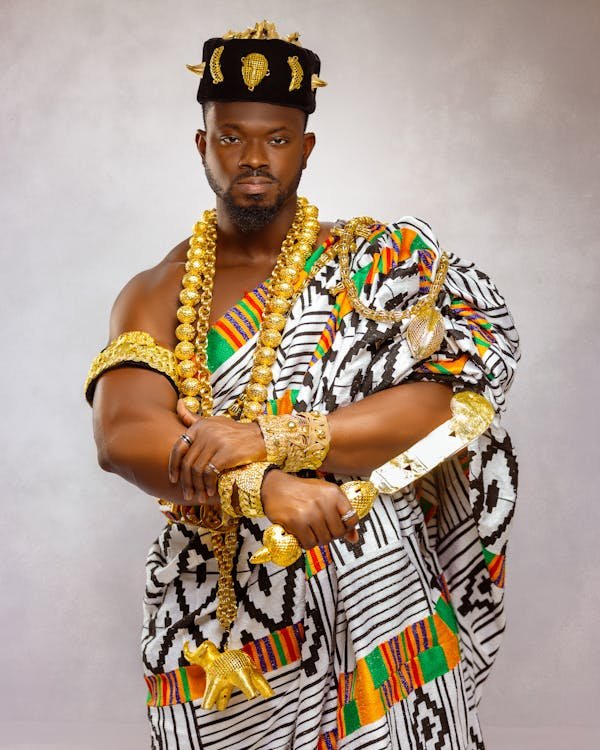
I looked at a series of four images, including Stevie Wonder appearing in a crisp white suit with baggy trousers, in stark contrast to women in elaborately wrapped kente African dress fashion and men in tribal outfits with decorative leg bands.
Nance, a native of Brooklyn, told me that about 200 black Americans from New York, including herself, traveled to Lagos because they knew I could hear another difference between this iteration and Q&A. The music followed me as I walked from gallery to gallery.
Malvoisin explained that they carefully selected a playlist – accessible via a QR code – that showcases the popular songs of each era in the gallery: chaabi, Arabic pop, hip-hop, afrobeat, highlife, jazz, kora and other genres. (Only a small selection can be heard in the performance, so use the link.) There’s a theme of abundance that runs through the music and matches the clothes and accessories on display.
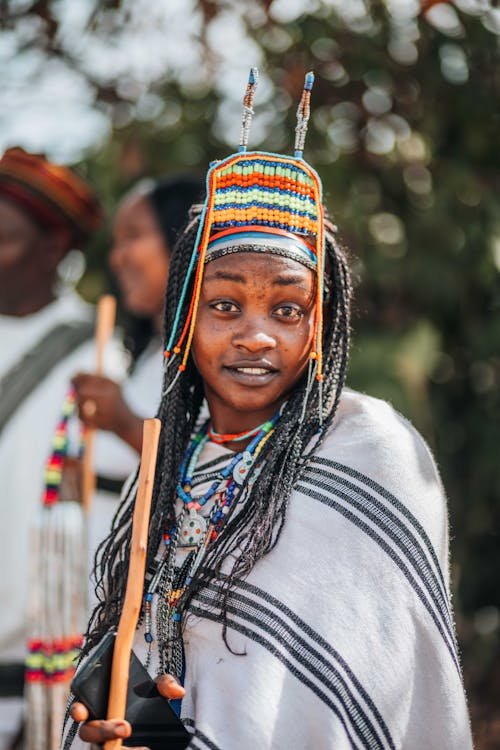
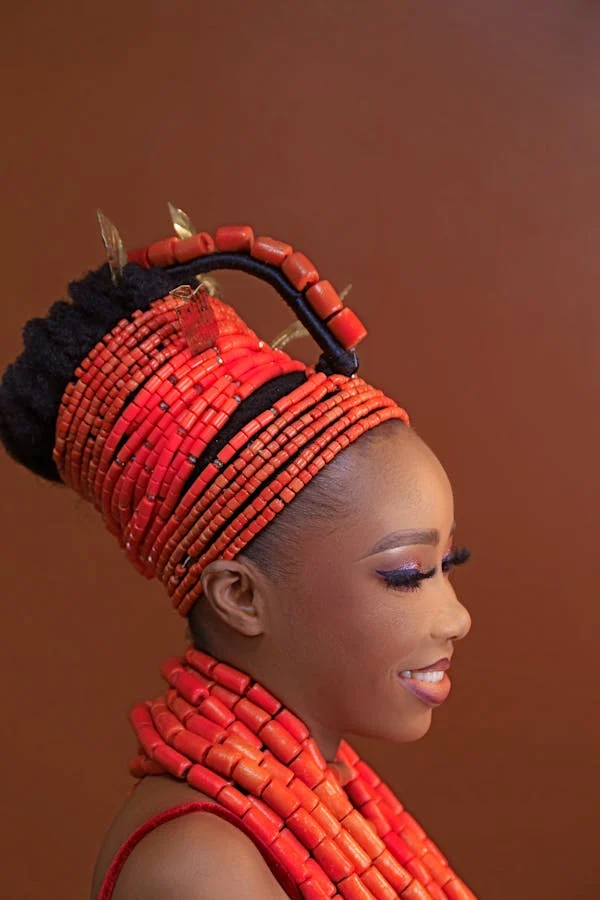
It must be said: this show is extremely beautiful, with textiles, accessories and African dress fashion that are surprising and curious. Not an inch of this show is expected or cliche.
The history lesson continues in the clothing exhibitions with stands featuring images of major mid-century designers: Kofi Ansah from Ghana, Chris Seydou from Mali and Shade Thomas-Fahm from Nigeria.
(Thomas-Fahm wears a spectacular gold suit accented with black checks and dark yellow chevrons.
No one wearing this dress can do their job unnoticed.
Behind these displays is a monitor showing current fashion shows where the innovative spirit of the time and place in Africa shines through, even in collections ostensibly based on European sources.
There are too many designers to describe all the amazing work here, but it is worth mentioning in the Jewelery section Kenyan designer Ami Doshi Shah, who designed a choker in gold and green metal with a long leather or fabric tail that falls back over the wearer. in his collection “Salt of the Earth”.
In a nearby booth, Inzuki, a young Rwandan brand, displays a woven basket necklace with interlocking bands of aquamarine, deep orange, pink and more, clearly derived from traditional basket design. Here, everyday life is reused as something extravagant.
This section is complemented by items from the Brooklyn Museum’s collection, including gold rings from pharaonic dynasties and early 20th century beadwork from southern Africa.
The show isn’t fetishistic, but it doesn’t shy away from talking about the process either.
From Katungulu Mwendwa, whose Katush line was designed in her home studio in Nairobi, Kenya, comes a series of mannequins that show three stages of a dress, from a cut paper pattern to a wearable mockup to the finished garment.
Artsi Ifrah, who won the Fashion Trust Arabia evening wear award last year and is based in Morocco, creates opulent clothing that revolves around maximalist layers, patterns, draperies and materials.
South African designer Lukhanyo Mdingi makes matching jackets and sweatpants for people of indeterminate gender from felted mohair, wool and acrylic, as well as scarves that double as body wraps.
Interspersed with opulent designs are street photography by artists such as Sarah Waiswa,
Trevor Stuurman and Stephen Tayo
, showing what people are wearing on the street and how their outfits are no less imaginative and daring than the better-equipped fashion here.
There is studio photography by crafty artists, such as the Malians Seydou Keïta and Malick Sidibé. What would it have been like to launch a career documenting this inquisitive and emerging beauty at the dawn of a brand new country?
It must have been exciting. And all this greeted me before I even got to the great round hall that ends the show.
In this gallery, some 40 mannequins are decorated with a fascinating selection of works by contemporary designers from the diaspora, including Eilaf Osman, Papa Oppong, Brother Vellies and its founders Aurora James, Christopher John Rogers and Studio One Eighty Nine in the department wants to show how Africa has a global footprint.
Click here


Leave a Reply