



Purple plaid dress
Purple plaid dress ? Yes please!
First let me say: I LOVE this Purple plaid dress! The photos can look a little weird because the printed page has so many different layers, and the little black grid followed by the dividers can be really distracting! But it is a beautiful flowing silk dress that encourages social distancing and is very appropriate given the current pandemic situation.
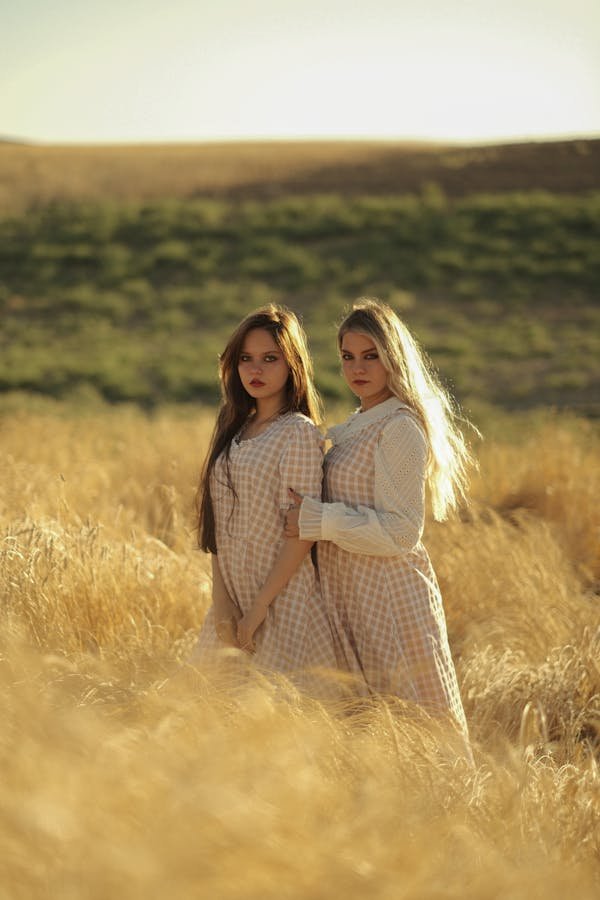
To fully illustrate how this dress would have been worn, we must Purple plaid dress the fact that this dress is missing several components to complete it.
1. A lace collar
Lace collars were popular between 1850 and 1860
and added a decorative and feminine touch to the dress, as well as serving the practical purpose of keeping body oils away from important parts of the dress. This was especially important because it was much more difficult to wash clothes back then! The tip of the collar probably also matched the tip of the undersleeves, aka
2. A belt
The height of the last button in relation to the drawstring at the waist makes me think that something else might have been worn with this dress, if not just to distract from the print but also to accommodate the tiny, cinched waist. Maybe it wasn’t as dramatic as the picture below!
3. A precise hoop skirt
Illustration in the August 1856 issue of Punch Magazine
for sale on eBay – of course I bought it, hoping that it would add some authenticity to the mountain foliage. Now, I already owned a conservation-friendly cotton muslin replica that my mom made for me for a wedding dress show a few years ago. All sizes and patterns are taken from Laura Flecker’s A Practical Guide to Costume Fitting, but although they complemented the dresses well, I wanted to find an accurate model to visualize the authenticity of what a late 1850s crinoline would have helped with the Silhouette.
The crinoline arrived and while it was super intriguing (I’ll definitely feature it in another post), it doesn’t really have much to do with the dress. He just looked empty and pathetic.
My cat decided to help Purple plaid dress the mannequin.
I went hunting again. Next I bought an 1860s petticoat (which is actually quite hard to find) and again hoped it would have some extra frill with the bow and petticoat. Again I was a little disappointed. So I reached for the authentic crinoline, the petticoat, and then my reproduction bow, all under the dress. It looked better, but still didn’t match the silhouettes of the time—or my standards—advertised in photos of the period. But it works. The images below show the image on the left with a crinoline and petticoat from this period; right – both plus the reproductive crinoline.
A little about underwear from the 1860s:
A woman wore several layers of underwear. Here is a view of the bottom layer working towards the dress itself.
Cross-section of underwear from the 1860s. The original owner of the image is unknown.
1. Chemise – a bit like a nightgown, worn next to the skin to protect the corset from oil and sweat
2. Briefs or Bloomers – basically two legs tied together at the waist with a ribbon or bow (there is no seam between the legs) – this was basically her underwear!
3. Corset
4. Corset cover – to hide the lines and colors of the corset and prevent the garment from catching on the corset fasteners
5. Light petticoat
6. Crinoline
7. Outer petticoat – To prevent the skirt of the garment from getting caught in the crinoline thread
8. Dress
The crinolines of the 1850s were similar to the bell shape of the 1840s, but were much wider. The silhouette changed slightly in the mid to late 1860s, with the bell shape moving to the back of the silhouette, emphasizing a flat front and a shaped back. The pictures below show an 1850s dress and crinoline compared to an 1860s dress and crinoline.
1850s printed cotton dress, collection of the Litchfield Historical Society
1860s Dress, Met Museum Collection1860s Dress, Met Museum Collection
Otherwise, this dress is a wonderful example of a c. Day dress from 1859/1860. The inverted pleats at the waist, the plain exterior without extra fringes, the size of the skirt and the shape of the sleeves all point to this period.
The construction is very typical of a late 1850s/early 1860s dress
and consists of a bodice and skirt sewn together after being made separately.
The whole thing is also hand-stitched.
The outside of the dress is made of printed silk, while the lining is made of a cotton or linen blend. I’m almost certain the lining is handwoven because the weave and twist of the threads is irregular and has an interesting sheen. Without a microscope, I’m not entirely sure of its composition.
The other really interesting feature of the lining on this dress, besides the Purple plaid dress hand stitching on the sleeves (see photo above left), is that half of the lining is cut out from the inside of the skirt. It must have been used for a better purpose, although it must be carefully removed from the dress. It has been cut from the hem along the bottom (the remnants can be seen in the magnifying glass photo above on the right, with just over half an inch of fringe remaining on the skirt).
Box pleats on the back of the skirt
The skirt itself, not the lining, consists of seven panels that are very clearly highlighted by the stitching. Each panel is approximately 22 inches wide, creating a base skirt circumference of 156 inches. The waist is 23 inches and the box pleats make it easier for the seamstress to have a full skirt but a narrow waist.
The pleats are wide and overlapping, and a margin of about 15 to 20 cm is probably left on the inside of the waist of the skirt. It was probably there for two reasons: 1) made by the wearer herself, who was not a professional seamstress, or 2) if she had gained weight and needed to alter it in some way.
The top consists of five panels with separate sleeves. The folds on the chest are decorated with reed sticks sewn into small slipcases, but no other sticks are present. The top closes with hook and eye closures and the buttons are for decoration only.
One thing to note about the buttons: the manufacturer ran out of maroon thread, so the last two buttons are attached with white thread.
Hook and eye closure and different colored threads used to attach the silk covered buttons
Purple plaid dress frills along the back of the arm and along the front cuff of the pagoda sleeve
The sleeves are bell-shaped pagoda sleeves – but lack pleat details and embellishments
Young Woman in Green Dress, circa 1857, from the collection of the Smithsonian American Art Museum.
seen earlier in the decade.
These sleeves were shorter,
flared, and were often worn with a decorative lace underarm known as engagantes. The ruffle detail is a nod to previous models but was made on a budget as the ruffle ends at the seam at the wrist. The Purple plaid dress dye that is clearly visible in the frill (and the green in the image to the right) was a new creation in the 1850s and a must in fashion.
William Henry Perkin accidentally invented the dye in 1856 when he was trying to find a cheaper cure for malaria than quinine. He used tar coal from gas lamps, which when boiled left a bright but resistant purple color on fabrics. It was an instant success, but like the green dyes made from arsenic,
the Purple plaid dress dyes were somewhat harmful and were given the name “purple measles” because women sometimes developed skin rashes from the dyes.
Unfortunately,
this dress has some ugly spots, the main ones being under the arms. There is also an ugly spot in the center back of the bodice and also in the center of the skirt on the right – right where the dress is particularly wrinkled and no amount of steaming can get it out. Based on the orientation of the folds, I imagine the dress was folded and some spilled onto the bodice, causing it to seep through the skirt.
Small surprise: On the right side of the skirt is a pocket embedded in the box pleats. There was a linen handkerchief in the bag! It must have been forgotten by the wearer at some point. There is a cute little embroidery in one corner, probably done by the owner of the dress or someone in her family.







Leave a Reply